Pyrography is a safe hobby if you follow the safety guidelines and protect yourself. Please read thoroughly!
Take your health & safety seriously.
Your Set Up:
· Do not leave a hot tool unattended; always turn off AND unplug the wood-burning tool before leaving the room.
Be mindful of turning it off, even if you only need to put it down for a moment to grab something. Trust me, it happens really fast and because the tool it so pen-like, you can forget really quickly how incredibly hot it gets!

· Work on a clean, hard surface: The cords can move things, turning your wood can knock things over… Make sure your area is cleared off, clean, and solid. You really don’t want to me catching something that is falling, mid burn with a hot tool in your hand!
· Work in a well-ventilated area: fans and/or fume extractors are always a good idea! (Position the fan right next to your work, facing away from you to pull smoke away from your face.) I also turn on this air purifier near my workspace. It’s got a washable carbon filter and easily replaceable hepa filter. It really takes away any doors almost immediately!
· Pull your hair up: if you have long hair. Any loose clothing or fabrics around you should be tucked away as well. Sparks can fly!
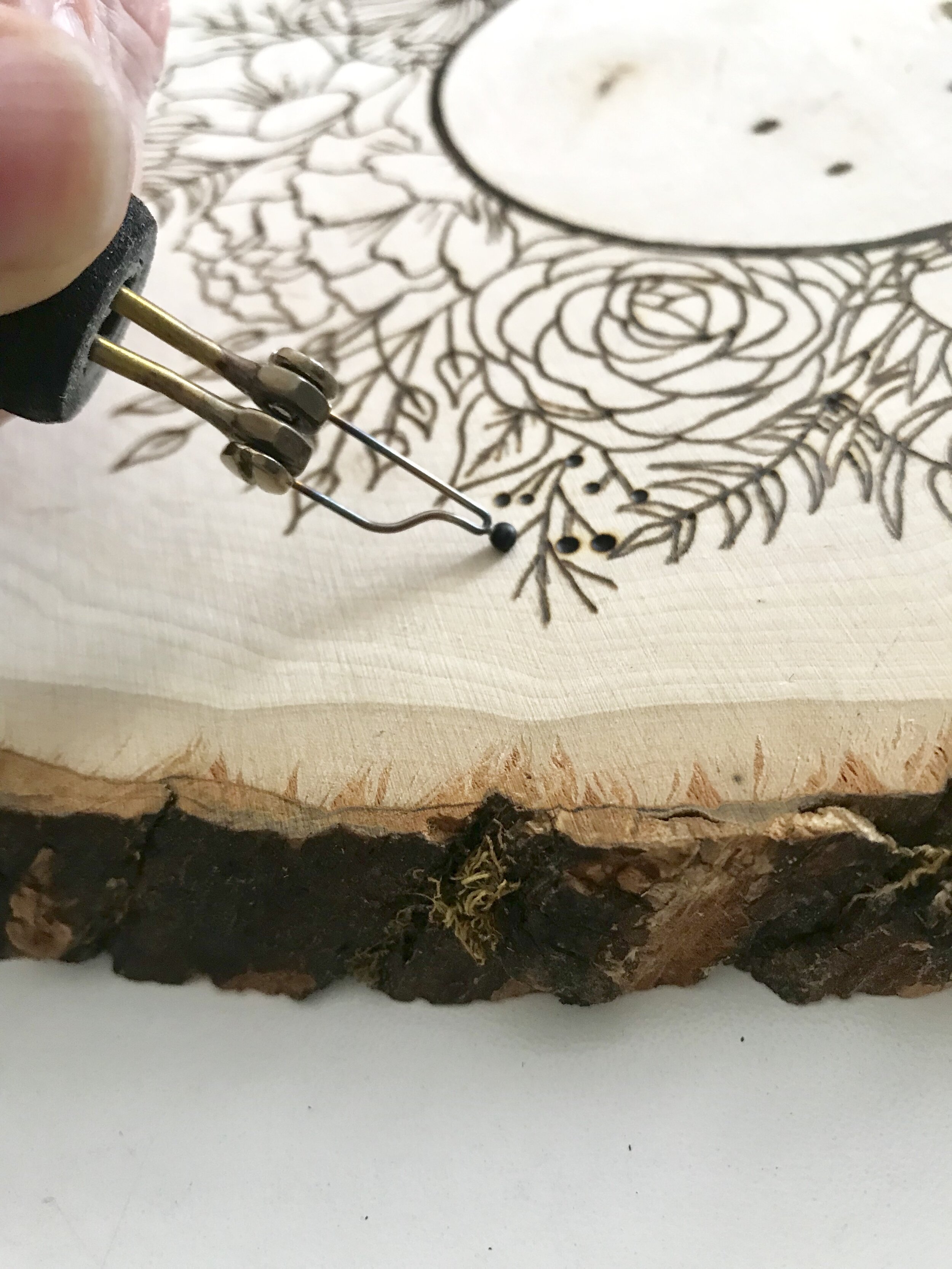
· Use a set of pliers and a ceramic dish for hot tips: This will allow you to safely switch, remove, and temporarily discard hot tips without burning your table (some nibs can easily roll around).

· Make sure you have a solid docking station to put the burner down on, ensuring it doesn’t move around; tape it to the desk if necessary.
· Teach children about safety. Kids are curious so make sure they know they can seriously hurt themselves when touching any metal parts. When your wood burning tool is in use; never leave children unattended around your work station. Kids love to press buttons (animals can also step on buttons and switches)!! Unplug your machine from the outlet if you’re not burning.
Your Wood Choice:
· Make sure the wood you choose is dried, sanded smooth, and not chemically treated (no stains or other finishes). This includes your own finishes like watercolours, paints, gold leafing etc. Always do your burning first and then add in your colors and finishes. Check out the blog post about which woods to avoid burning on.
· Check wood toxicity of the wood you will be using prior to burning a new piece. I like wood-database.com. Also, never ever burn on something that has a finish on it (any coatings, paint or even stain…). Always add your mixed media after you burn and if you missed it above, make sure to check out the blog post about which woods to avoid burning on.
· So which woods can you use? Check out the blog post about the Best Wood for Pyrography.
The Smoke:

· Always wear a mask with a rating of P-95 or preferably higher. There are many different options; do some research and make sure the rating is high enough for smoke. Look for masks with carbon filters and don’t cheap out on this one!!
Which one do we love? RZMask is a great company for many reasons. Their masks are soft and super comfortable. They are reusable (change out the filter and wash the shell - this will save money and the environment)! Plus, they’ve got lots of styles and colours to choose from.
I personally like the M3 (like in this photo) with the thick strap because I always wear my hair in a high bun. The M3 has the option to switch around the straps to a double strap on each ear and a double strap along the back of your head. RZMask has a variety of strap options and sizes for different sized heads, hairstyles and shapes…

· As mentioned in the set up section above, ventilation is crucial for pyrography. Even though you have a mask on, the smoke is still lingering in the room you are burning… I use a small fan which pulls away the smoke from my face, however, to protect the lungs of those around you, you have a couple options. You can choose a room air purifier (again, make sure it has a carbon filter); I love the Winix brand - it is quiet, looks good and removes all the smelly stuff from the air really quickly!

If you are travelling and want something smaller, we suggest the Razertip Razaire Mini - Smoke Extractor. You kind of have to be close to the machine (I usually set this up on my wood slice), but it is light and portable so its perfect when I am on the go!
🔥 Use the discount code BASIA at checkout to save some money on your purchase 🔥
· Avoid smoke inhalation and eye irritation by working with your face tilted to the side of the wood being burned (wear eye protection if you burn hot and tend to sit close and lean in to your work).
If you feel any dizziness or headaches coming on while burning, stop and assess your situation.
Take breaks often!
Always follow all safety precautions set by the wood burning tool manufacturer.
Check out the blog post: Common Wood Types You Should Never Burn On
To learn more about pyrography, get inspired and grow with a community of woodburning artist, join us in the FREE Burn Club!