Most people think of pyrography as a hobby.
And sure. It is!
But for a lot of us, it's something closer to therapy.
Pyrography Slows You Down. Whether You Want It To or Not.
There's something about picking up a burning pen that forces a gear shift.
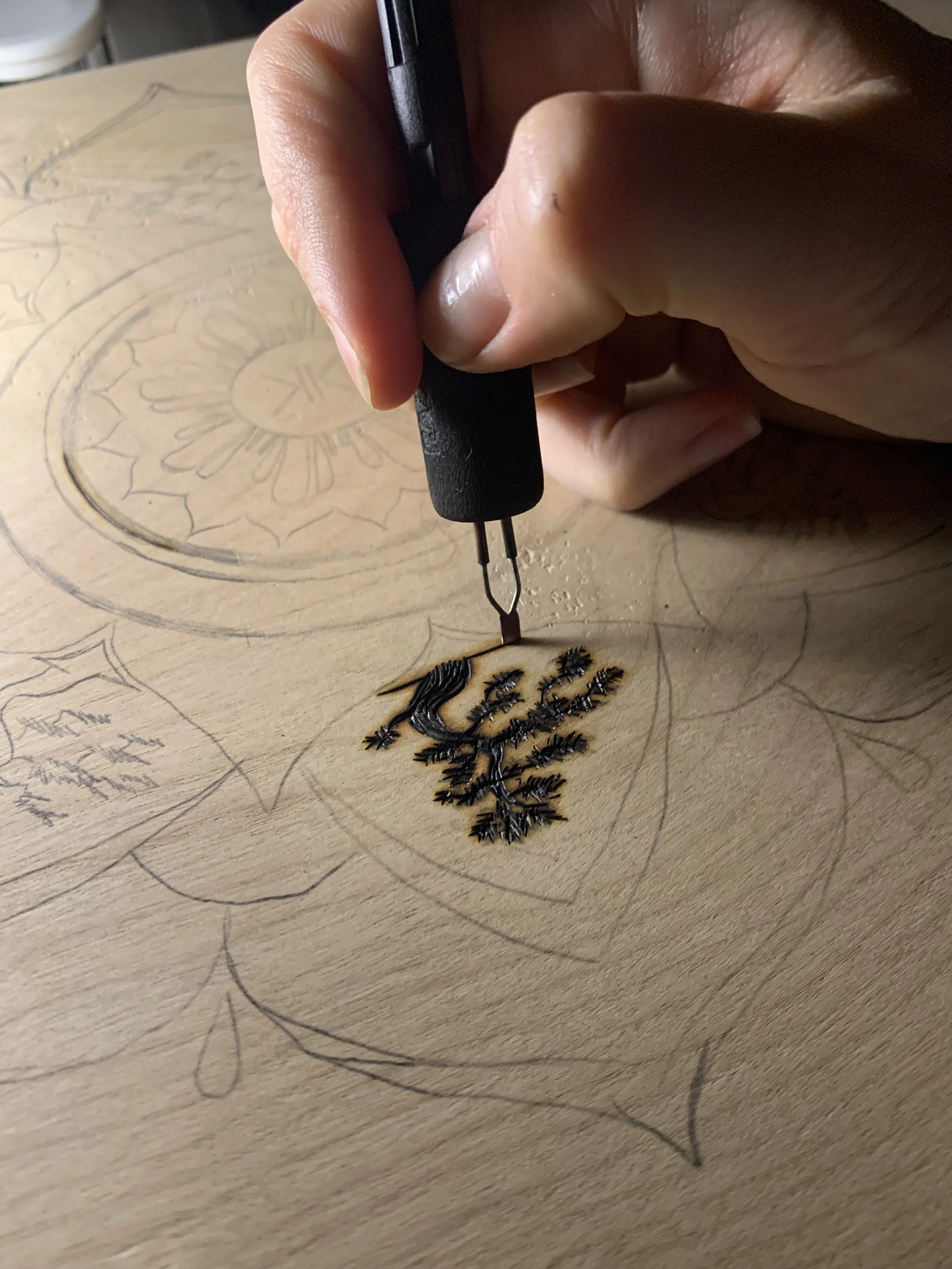
The heat takes a moment to stabilize.
The wood (or whatever surface you burn on) responds to pressure and pace.
The smoke gently rises and gets pulled into your fan as if it were alive.
There is also no undo button…
That irreversibility changes how you move.
You stop rushing. You stop multitasking. You can't be half-present at a hot nib and expect good results.
That forced slowness? That's not a side effect of the craft.
That is the craft.
Presence Isn't Optional. It's Required
There's something that happens when you settle into a burn session. I've felt it myself, and I've heard it from artists at every level… The world just disappears.
The mental chatter starts to quiet. You stop running your to-do list. You stop replaying that conversation from earlier. You start noticing the grain of the wood, the resistance under your tip, the way the smoke curls up when you slow down.
Psychologist Mihaly Csikszentmihalyi, who spent decades studying flow states, found that regular access to deep focus (the kind you can't fake) builds measurable improvements in well-being over time.
That shift is real, and it's not just something artists talk about. A meta-analysis of 17 studies involving over 10,000 people found that greater mindfulness is directly linked to higher levels of flow, that state of deep absorption where reality as we know it just stops. You know, where you forget to eat, lose track of time, and catch yourself holding your breath.
Pyrography is essentially a manual entry point into exactly that.
You're not thinking about the future. You're not processing the past.
You're just burning. Here. And Now.
What Making The Book, Presence, Taught Me
A few years ago, I made a book called Presence.
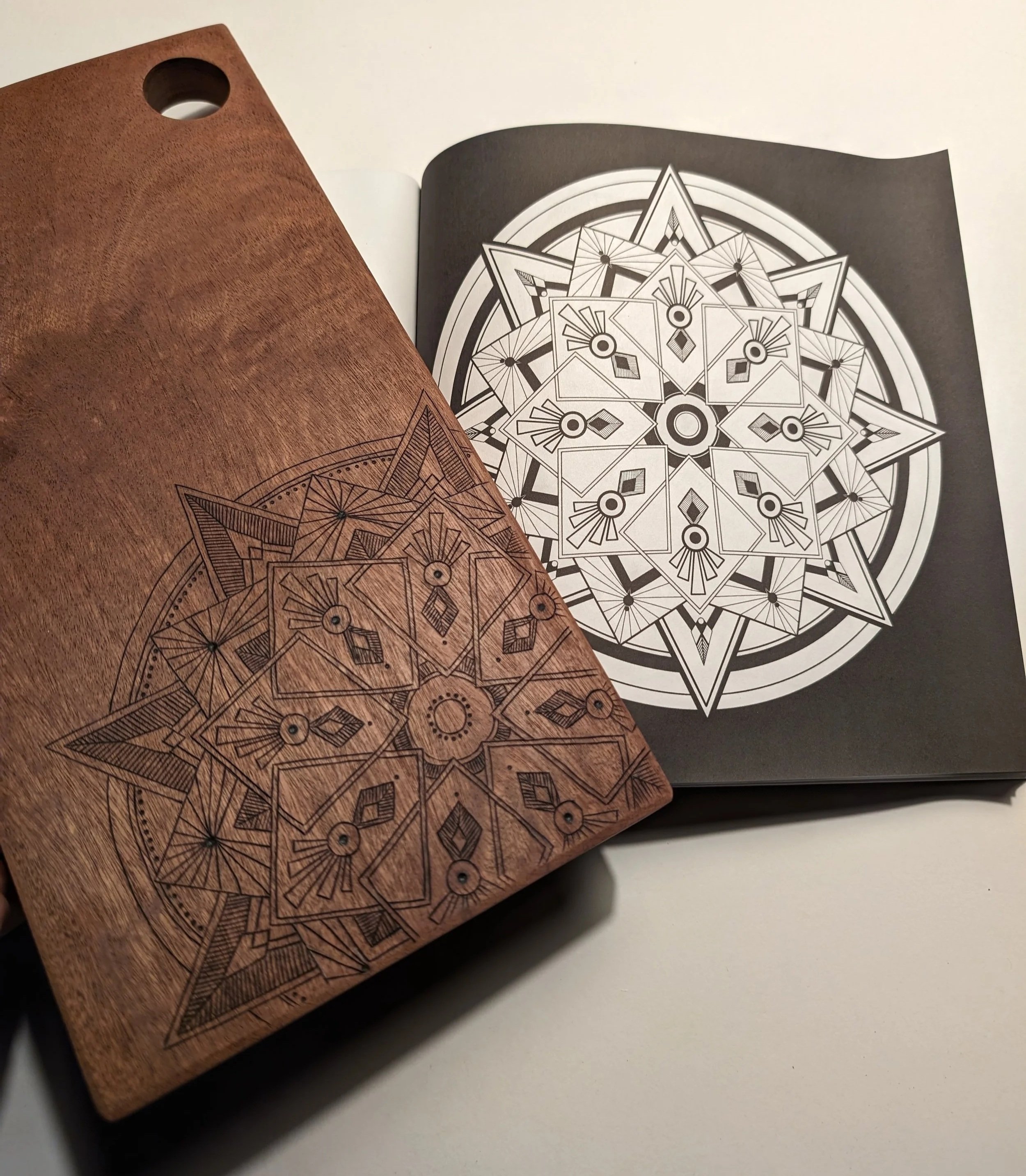
The whole idea came from something I noticed in my own practice. Drawing radial symmetry made me slow down in a way that nothing else did. There was something meditative about the repetition. The rhythm of it.
But when I started burning that radial symmetry?
It went even deeper.
The pace of the pen, the heat, the permanence of each stroke… It created a layer of presence that went deeper than what drawing alone gave me. I wasn't just making art. It became a meditative practice.
And I get it, it might not be for everyone…. But it’s unlocked so much for me and got me through some really difficult times so I can't resist sharing this form of meditation with the world!
I've always felt like I'm meant to spread peace of mind through art. It's the ‘why’ behind everything I make and every space I build.
So if technical hiccups are getting in the way of that for you, I've got you covered! Check out these two free blog posts if you are new or running into issues:
10 Steps for Wood Burning By Hand or
The Pyrography Troubleshooting Guide
And if you're past the technical stuff and ready to go deeper; that's where Burn Flows come in.
What a Burn Flow Actually Looks Like
A burn flow isn't a project. It's not something you frame or sell.
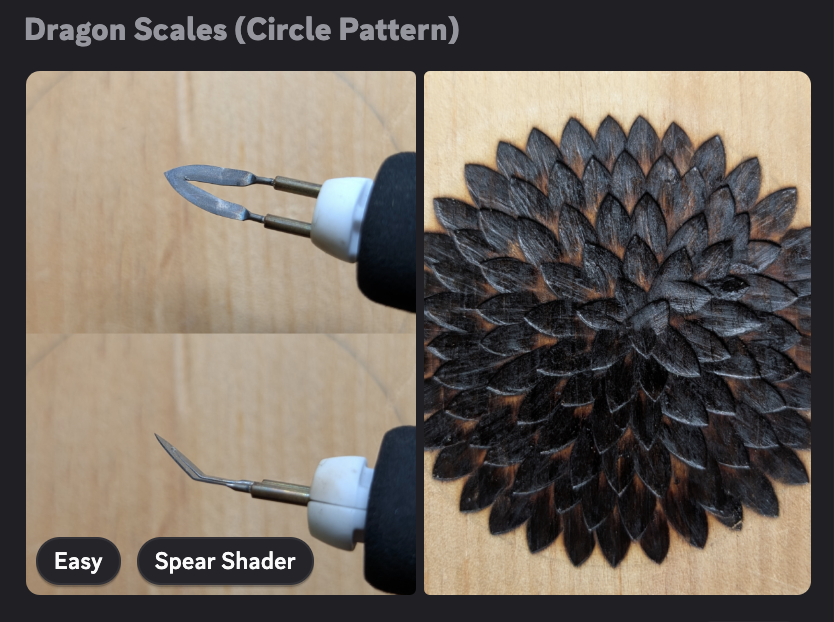
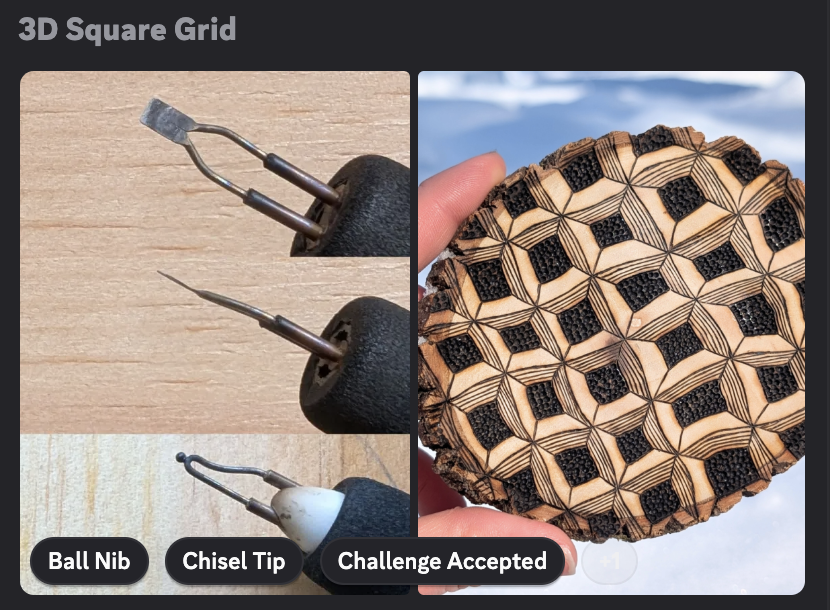
It's a short, focused burn exercise (a texture or a repeated mark) designed to get you out of your head and into your hands. No pressure to make something finished. Just you, the wood, and the rhythm of the tip.
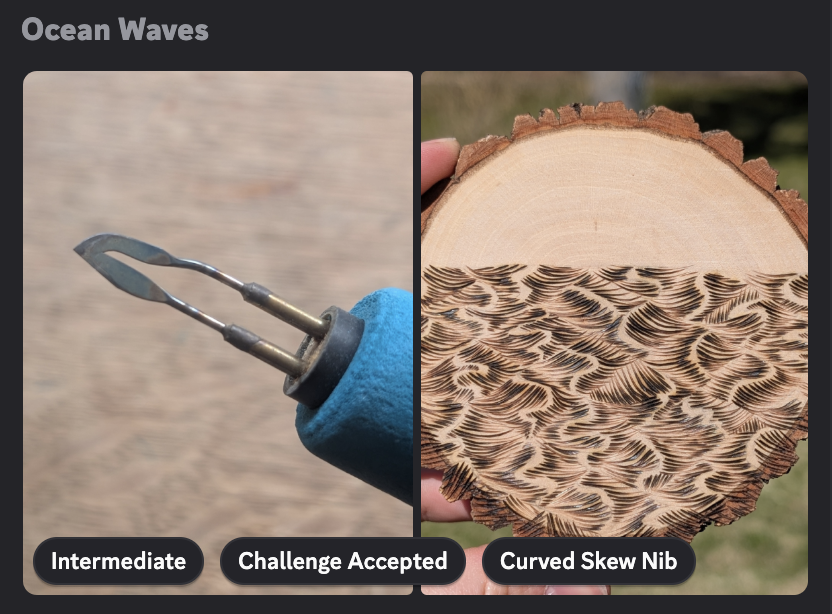
Inside Burn Club+, burn flows are organized by difficulty and nib type so you can
choose by what nib's you already have on hand, or
by the texture you want to practice.
Each one includes a timelapse of the full process and a step-by-step video where I walk you through it start to finish.
I am adding new ones every month, and members are free to request textures or specific nibs, or even just any kind of ideas!
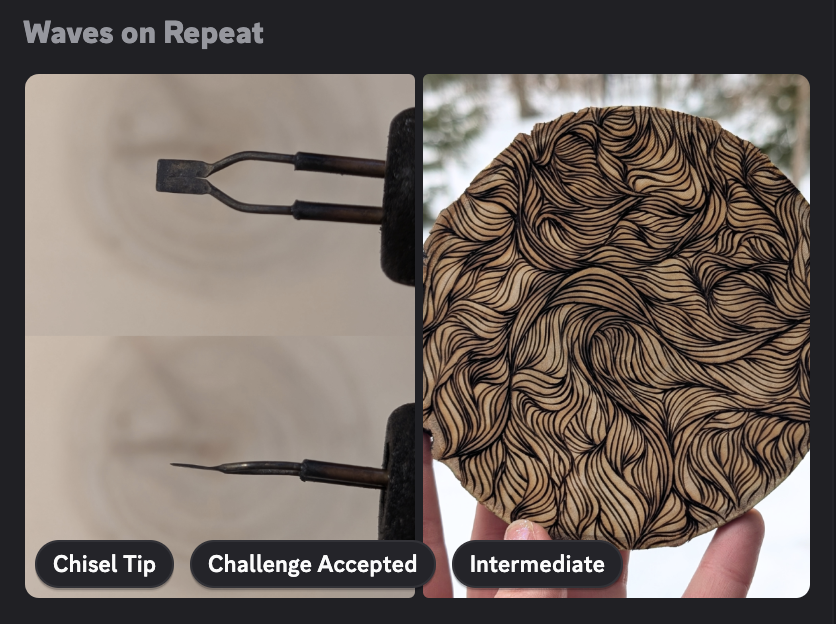
The burn flows are one way in. But even without them, a little intention is all it takes to go deeper. Try any of these — one, some, or all of them:
Before picking up your burner, take a moment to breathe and think about why you’re creating.
Take a second and say it out loud: “I burn today with the intention to free my mind”
Take it a little deeper and try to sync your breath with your movements: inhale as you lift the pen, exhale as you burn.
Focus on the process, not the outcome. Instead of worrying about making a "perfect" piece, enjoy the sensations: the way the pen glides, the smell of the wood, the sound of the tip sizzling against the surface. Let yourself be absorbed in the moment and in feeling of the burn.
Try a repetitive pattern. It doesn’t have to be a burn flow. It can be as easy as filling up your wood slice with dots, or repetitive lines, or all swirls…. The act of repeating shapes helps bring a sense of calm and order and if you are not thinking of what to do next, it’s not only satisfying, but you free yourself from making decisions and can embrace not thinking, even just for a moment. That’s presence.
You Don't Have to Be Struggling to Benefit
This isn't only for the hard seasons.
Burnout, grief, anxiety, overwhelm… yes, pyrography can be a really helpful anchor in those moments. But it doesn't have to be a crisis response.
Mental health works a lot like physical health. You shouldn’t wait until you're injured to start moving your body.
Consistent, small steps build a foundation. A daily walk isn't dramatic, but it compounds.
A burn session (even a short one) works the same way. It's a rep. It's practice. It builds something over time that carries into the rest of your day, your week, your life.
And it doesn’t have to be a Burn Flow. It can just be any kind of doodling. It can be tracing a template or a hand drawn sketch. It can be a piece that takes you a year to complete because you go slow and move with intention.
Focus on the process, not the outcome.
The goal is to practice presence so it becomes something you can access more easily, even when you're not holding a burning pen.
What Has Pyrography Done for Your Mental Space?
Because that's the thing about pyrography. It starts as a hobby. And somewhere along the way, it becomes something you actually need.
What has pyrography done for your mental space?
Reply here or bring it into The Burn Club.